Projects / Data
Here you will find a sampling of some of the projects and research we've undertaken in our lab group, from local Oregon estuaries to Greenland's fjords and glaciers, generously funded by external sources and the University of Oregon. I am part of the steering committee for a community-led Greenland Ice Sheet Ocean (GRISO) Network and have taught in the GRISO summer school twice (2024 and 2025 in Nuuk, Greenland).
Shortcuts to research on:
- Icebergs
- Fjord & Ice-ocean interactions
- Estuarine dynamics & Coos Bay
- Glacial lakes
NOTE: We have a new NSF funded project on lake-terminating glaciers along with collaborators Billy Armstrong (App State) and Irina Overeem (CU-Boulder). More on this project soon, but you can see a video of our camp at Gilkey Glacier here. Or go to the lakes page.

Photo by D. Carroll, 2017
We study the melt and movement of icebergs, particularly near their source, in Greenland's glacial fjords. We are concerned with how much melt they produce, and where that meltwater goes spatially (across the North Atlantic and vertically in the water column).
Click Learn More to see data what are available, new papers, and other resources. See publications list for relevant papers.
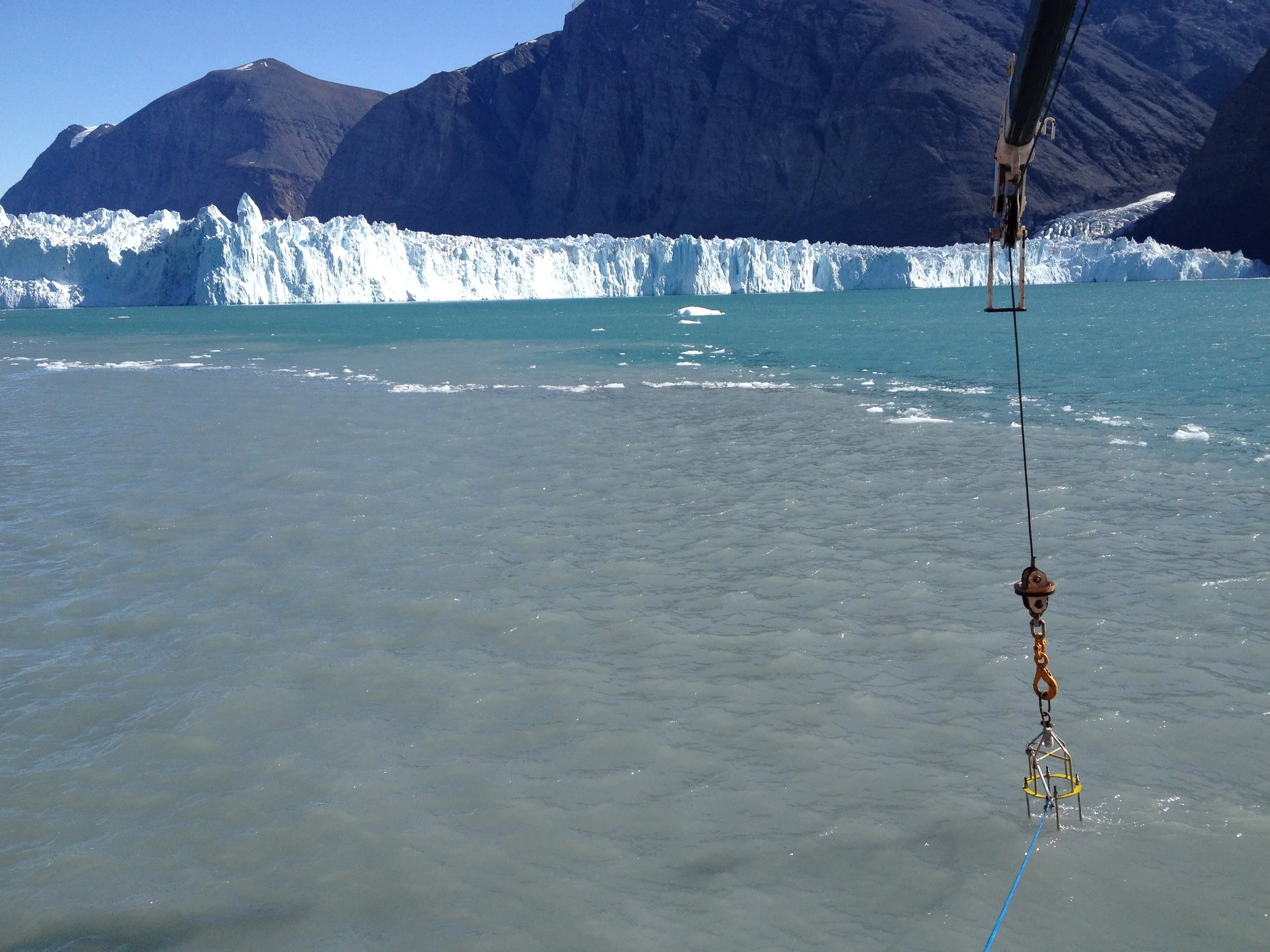
KS Glacier, West Greenland, 2015
Glaciers that end in the ocean are sometimes called tidewater or marine-terminating glaciers. The oceanic fjords they enter are fundamentally different than other fjords (e.g., Puget Sound) or even other estuaries in general. We study the dynamics of these fjords, and the coupling between the ocean and ice systems, which is a key component of understanding global sea level rise and circulation.
Click Learn More to see data that are available and other resources. See publications for papers & workshop reports.

Overview map of Coos estuary
The Coos estuary in southern Oregon encompasses the South Slough National Estuarine Research Reserve, the towns of Coos Bay and North Bend, and the marine lab of UO, the Oregon Institute of Marine Biology (OIMB). We study the dynamics of this small, seasonal estuary from to integrate many processes, such as larval movement, sediment transport, upwelling intrusions, and exchange flow.
Click Learn More to see data that are available, other resources, or see our YouTube channel for simulation videos. See publications list for relevant papers.
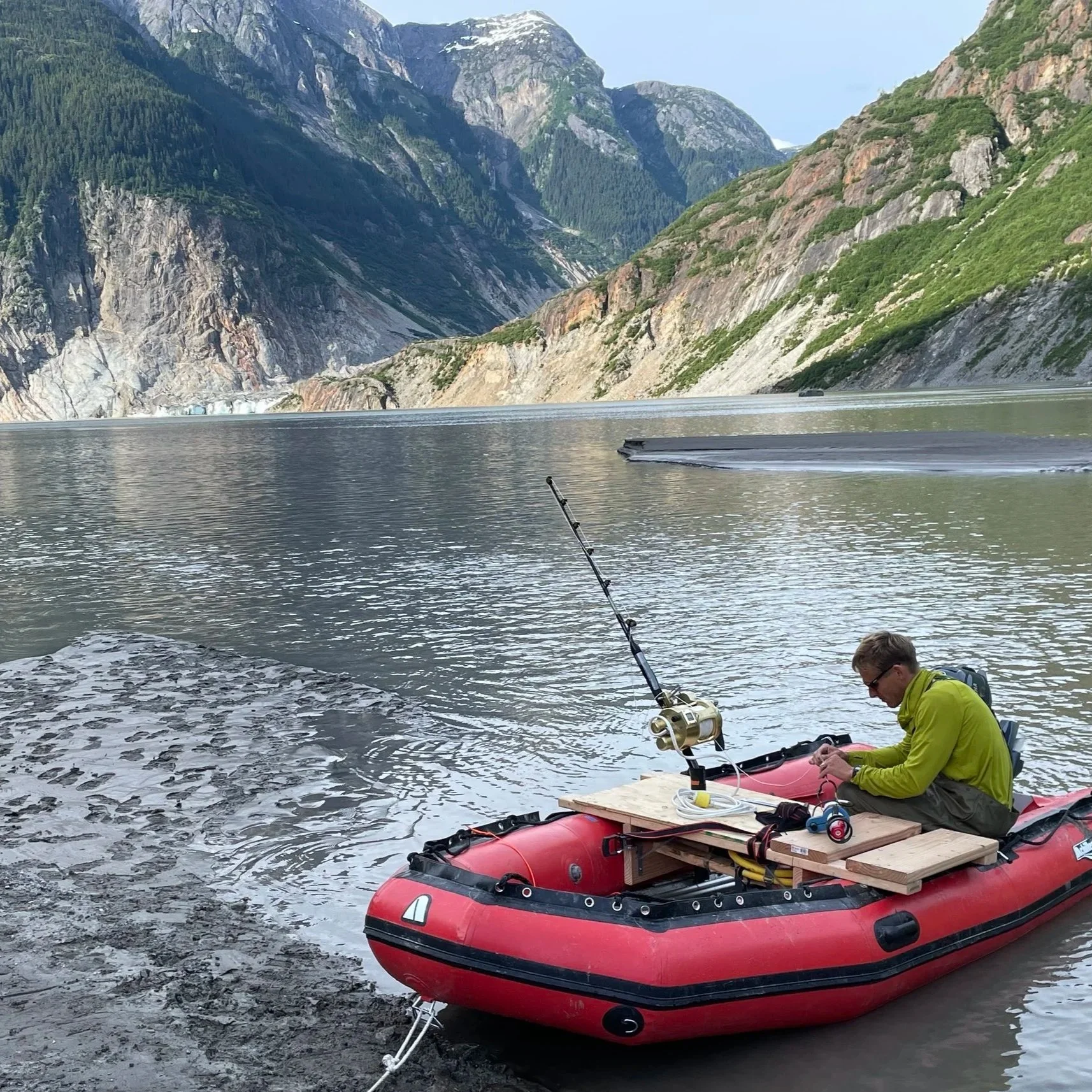
Prepping the zodiac for work on Gilkey Lake, SE Alaska
Recently we have begun taking what we learned from tidewater systems to glaciers ending in lakes (i.e., freshwater!). There are lots of similarities, but also interesting differences. And lake-terminating glaciers seem to behave dynamically somewhere between tidewater and alpine systems. The # and size of proglacial lakes is increasing worldwide.
Click Learn More to see data that are available, other resources, or see our publications page.
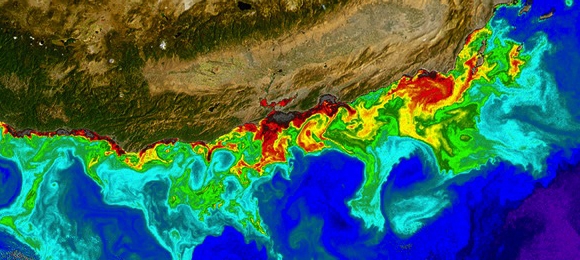
Many people are not aware of the abundance of coastal & marine science research going on at the University of Oregon. Click the Learn More button to see an evolving list of marine science resources, classes, faculty, etc. at UO. Please let us know any suggestions or changes.